

Construction doesn’t stop just because the temperature drops. When the thermometer dips, the chemistry of concrete changes, and pouring in cold weather is a high-stakes balancing act. Get it right, and the structure is sound. Get it wrong, and you’re looking at compromised strength and durability.
Understanding the thresholds of “cold weather” and the specific pitfalls of winter pours is essential for any project manager looking to maintain their schedule while prioritizing concrete construction safety to protect the workers who build our communities.
What Defines “Cold Weather” for Concrete?
According to the American Concrete Institute (ACI), cold weather is officially defined as a period when for more than three successive days, the average daily air temperature drops below 40°F, and the air temperature is not greater than 50°F for more than one-half of any 24-hour period.
When temperatures reach these levels, the hydration process (the chemical reaction between cement and water that creates strength) slows down significantly. If the water inside the mix freezes, it can expand, causing permanent internal damage and reducing the ultimate strength of the concrete by up to 50%.
Common Cold Weather Mistakes to Avoid
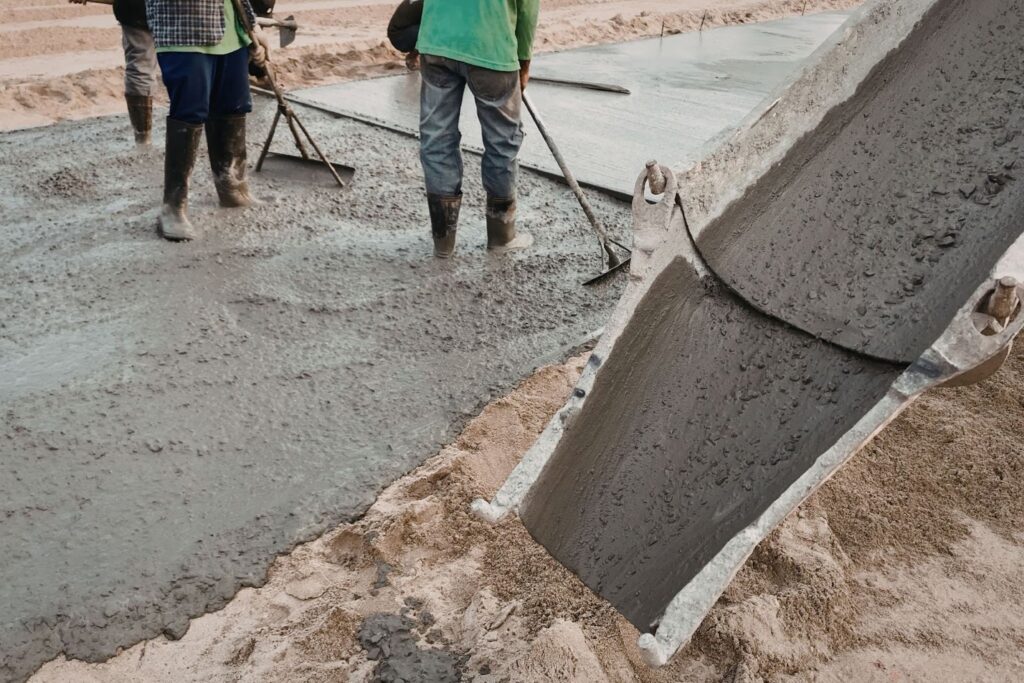
Avoiding these common mistakes can save a project from costly rework:
Pouring on Frozen Ground
Never place concrete on frozen ground, snow, or ice. When the concrete thaws the ground beneath it, the subgrade will settle, leading to immediate cracking. Additionally, the cold will cause the concrete closest to the ground to cure slower, causing the concrete to not develop strength adequately, leading to cracking or possible structure failure.
Allowing the Concrete To Get Cold
Concrete should be kept warm (around 50 degrees Farenheit) to cure properly, and fresh concrete can freeze at 25 degrees Fahrenheit so that it reaches the right compressive strength measurement. Concrete needs warmth to continue curing, and some builders use portable heaters (although be careful when using heat, as it can result in a weak structure if used improperly.) It’s also important to keep your tools and building materials warm, as this will affect concrete temperatures.
Ignoring On-Site Safety Needs
Cold weather increases the risk of slips, trips, and cold-related injuries. A common mistake is focusing so much on the concrete that you overlook the crew. Ensuring your team has high-quality safety gear for workers is non-negotiable when dealing with ice and freezing winds.
The NITROcrete Advantage: Precision and Stability
This is where comprehensive concrete temperature control systems become the most valuable tool in a contractor’s arsenal. While many think of nitrogen only for cooling in the summer, the core benefit is stability and consistency year-round.
NITROcrete offers a sophisticated approach through several specialized solutions:
- Automated Concrete Cooling Systems: These systems take the guesswork out of the batching process. By automating the thermal regulation, you ensure that the mix arrives on-site at the exact temperature required to maintain hydration, even when ambient temperatures are working against you.
- Practical Liquid Nitrogen: NITROcrete has made the in-line use of practical liquid nitrogen a reality, allowing for precise dosage that doesn’t mess with your water-to-cement ratio, a critical factor in preventing winter scaling.
- Sustainable Concrete Cooling Solutions: Traditional heating and cooling methods can be energy-intensive. By utilizing nitrogen-based technology, producers can achieve more sustainable concrete cooling solutions that reduce waste and energy consumption compared to old-school ice or inefficient heaters.
Consistency is Key
The biggest mistake in cold weather is inconsistency. When one batch arrives at 60°F and the next at 45°F, your set times will be all over the map, making it impossible for finishers to do their jobs safely and effectively. Using a temperature-controlled concrete system ensures that every load is uniform, allowing the chemical reaction of hydration to proceed exactly as designed.
Take Control of Your Next Winter Pour
Don’t let the winter freeze halt your momentum or compromise your standards. NITROcrete provides the comprehensive concrete temperature control systems you need to maintain peak performance in any climate. By combining our practical liquid nitrogen technology with a commitment to concrete construction safety to protect the workers who build our communities, we ensure your project stays on schedule and your crew stays protected.
Contact the NITROcrete team today to learn more about our sustainable concrete solutions.